.png)


How to Choose the Best Printing Method for Custom Apparel

Introduction:
When ordering custom apparel for a business, event, school, or organization, one of the most important decisions you’ll make is selecting the right printing method. Different techniques offer different benefits in terms of durability, appearance, and cost. If you're wondering how to choose the best printing method for custom apparel, understanding the strengths of each option will help you make the right choice.
Custom apparel is widely used for branding, employee uniforms, promotional events, and merchandise. However, the printing method you select can greatly impact how your design looks and how long it lasts.
By learning about the most common printing techniques and when to use them, you can ensure your custom apparel looks professional and meets your expectations.
Screen Printing
Best for Bulk Orders and Bold Designs
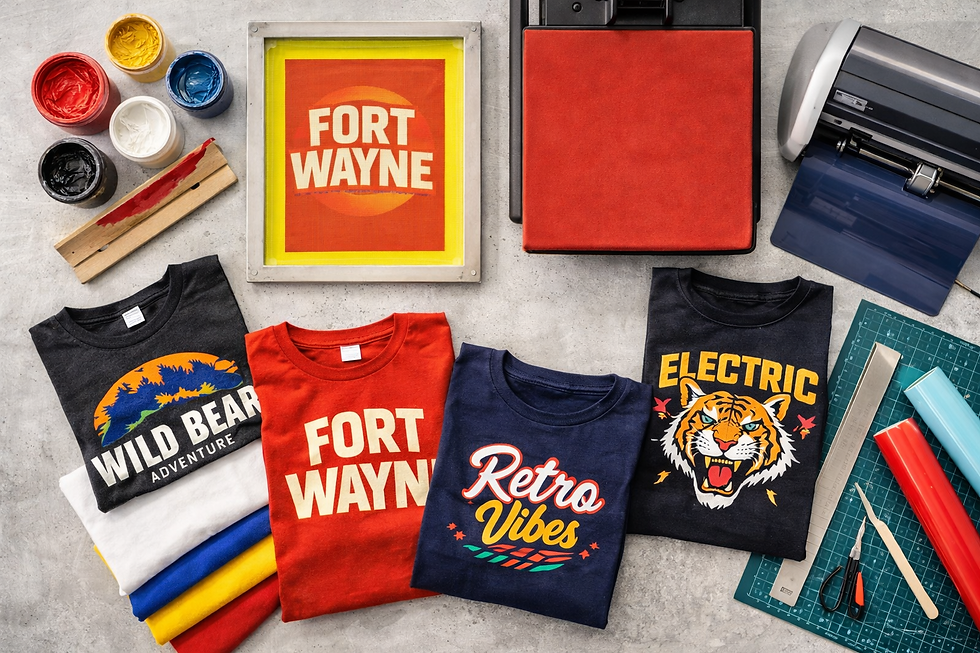
Screen printing is one of the most popular methods for custom apparel. This process involves pushing ink through a mesh screen onto the fabric to create the design. Each color requires its own screen, allowing printers to produce vibrant and durable prints.
Because the setup process requires preparation, screen printing becomes more cost-effective for larger orders.
Advantages of Screen Printing
Ideal for large quantities
Produces vibrant, bold colors
Long-lasting prints that hold up well after washing
Great for simple or medium-complexity designs
Screen printing is commonly used for T-shirts, promotional apparel, and team uniforms.
Direct-to-Garment (DTG) Printing
Best for Detailed or Multi-Color Designs
Direct-to-garment printing works similarly to an inkjet printer but prints directly onto fabric. This allows for extremely detailed designs, including gradients, photographs, and multiple colors.
DTG printing is especially useful for small orders because it requires little setup compared to screen printing.
Advantages of DTG Printing
Excellent for detailed artwork
No minimum order requirements in many cases
Ideal for small batches or one-off designs
Smooth, high-resolution prints
DTG is often used for custom merchandise, small business apparel, and personalized shirts.
Heat Transfer and Vinyl Printing
Best for Personalization and Specialty Designs
Heat transfer and vinyl printing involve cutting designs from vinyl material and applying them to garments using heat and pressure. This method works well for personalized apparel such as names, numbers, and custom graphics.
It’s commonly used for sports jerseys, team uniforms, and specialty shirts.
Advantages of Heat Transfer Printing
Ideal for personalized designs
Works well for small orders
Allows for unique textures and finishes
Great for adding names and numbers
Embroidery
Best for Professional and Corporate Apparel
Embroidery uses thread to stitch designs directly into the fabric, creating a textured and professional appearance. This method is often used for business uniforms and premium apparel.
Because it creates a stitched design rather than a printed one, embroidery offers excellent durability.
Advantages of Embroidery
Professional and polished appearance
Long-lasting stitched designs
Ideal for logos and small graphics
Works well on thicker materials like polos, jackets, and hats
Many businesses choose embroidery for staff uniforms and corporate clothing.
Factors to Consider When Choosing a Printing Method
Order Quantity
Large orders typically benefit from screen printing due to its cost efficiency, while smaller orders may be better suited for DTG or heat transfer printing.
Design Complexity
Highly detailed designs with many colors may work better with DTG printing, while simpler designs often look excellent with screen printing.
Type of Apparel
The material and style of the garment also influence the best printing method. For example, embroidery works well on polos and jackets, while screen printing is ideal for cotton T-shirts.
Budget and Timeline
Some printing methods have setup costs or longer production times. Planning ahead and discussing options with a professional printer can help you choose the most efficient option.
Conclusion:
Understanding how to choose the best printing method for custom apparel ensures that your designs look great and last as long as possible. Screen printing works best for bulk orders, DTG printing is ideal for detailed designs, heat transfer is great for personalization, and embroidery offers a professional finish for corporate apparel.
By selecting the right printing method based on your design, apparel type, and order size, you can create custom clothing that represents your brand with quality and style.
Working with an experienced apparel printing provider can also help guide you through the process and ensure the final result meets your expectations.
Do you have questions about choosing the right printing method for your custom apparel? Fill out our form below and our team will help you start your project with confidence.


Comments